

At American Cool, Heat, Air & Commercial Refrigeration, we specialize in precise HVAC diagnostics that keep commercial systems running smoothly. Our recent job at a hotel in Rancho Cucamonga involved testing a critical safety component of the HVAC system: the low-pressure switch.
Though small in size, the low-pressure switch plays a big role in protecting the system from major damage. Here's how our team approached the testing and why this routine check is so important for long-term system health.
Understanding the Low-Pressure Switch
A low-pressure switch is a protective device found in refrigeration and HVAC systems. Its purpose is simple but essential:
It shuts the system off if the refrigerant pressure drops below a safe threshold.
Low refrigerant pressure can result from:
- Leaks in the system
- Blocked expansion valves
- Restricted airflow
- Failing components
If pressure drops too low and the system keeps running, the compressor can overheat, run dry, or fail altogether. That's why a functioning low-pressure switch is crucial—it acts as a first line of defense against costly breakdowns.
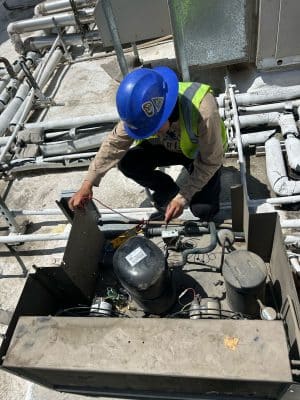
How We Tested the Low-Pressure Switch
Our team arrived on-site to evaluate a possible issue with the cooling system. After preliminary checks, we identified the need to verify the functionality of the low-pressure switch.
Here's what the testing involved:
Visual Inspection
We first located the low-pressure switch and performed a visual inspection. This included checking:
- Electrical wiring and connectors
- Signs of corrosion, damage, or loose fittings
- Placement and mounting
Everything appeared intact and secure, allowing us to proceed with testing.
Pressure Reading Verification
Next, we connected our refrigeration gauges to the system and monitored the suction pressure. This gave us a real-time look at how much pressure the system was maintaining on the low side. The system was operating near the switch's set threshold, making this test especially relevant.
Functional Testing
To test the switch, we simulated a low-pressure scenario to see if the switch responded correctly by shutting off the system. This confirmed whether the switch was functioning properly—or stuck open/closed, which can happen over time due to wear or contamination.
In this case, the switch performed as expected, confirming that the system was adequately protected against low-pressure risks.
Why Low-Pressure Switch Testing Matters
Though it's a simple component, a faulty low-pressure switch can result in:
- Compressor failure
- Refrigerant leaks going undetected
- Inefficient cooling and energy loss
- Total system shutdown in peak usage times
By testing this switch proactively, the hotel's management avoided potential equipment failure, costly emergency repairs, and guest discomfort—especially during warm months when cooling loads are highest.
Preventative Maintenance = Long-Term Savings
This job is a great reminder of the importance of routine HVAC system inspections. Something as small as a pressure switch can prevent major issues if caught early. That's why we always recommend commercial properties—especially hotels, restaurants, and medical facilities—invest in regular maintenance and diagnostics.
At American Cool, Heat, Air & Commercial Refrigeration, we go beyond the basics. Our team checks all the vital signs of your system to ensure it's not just working—but working safely and efficiently.
Conclusion: Small Check, Big Protection
Our low-pressure switch testing at the Rancho Cucamonga hotel may seem like a small job, but it had a big impact. By confirming the switch's functionality, we ensured the system could protect itself from refrigerant-related issues, helping the hotel avoid bigger problems down the line.
If you're not sure when your system's safeties were last tested, it might be time to schedule a check-up.