

Running a restaurant in the Coachella Valley is already a high-stakes operation. Add summer temperatures that routinely hit 115°F, and your commercial kitchen's HVAC and refrigeration systems aren't just a comfort consideration — they're the difference between a smooth service and a health code violation.
Most restaurant owners think of HVAC and refrigeration as two separate problems. In reality, they function as one interconnected system — and when one struggles, the other almost always follows. Understanding how they interact is the first step toward protecting your equipment, food inventory, and bottom line.
Why Commercial Kitchens Have Unique Cooling Demands
A standard commercial building puts a relatively predictable load on its HVAC system. A restaurant kitchen is a different story entirely. You're running fryers, ovens, steam equipment, and grills — all generating enormous amounts of heat — while simultaneously running walk-in coolers, reach-in refrigerators, and ice machines that need to stay cold.
This dual demand creates what HVAC engineers call a high-heat, high-humidity environment. In the Coachella Valley, where outdoor ambient temperatures are already extreme, your mechanical systems are working at maximum capacity for months at a time. Equipment that might last 12–15 years in a moderate climate often shows strain in 7–10 years here.
This isn't a reason to panic — it's a reason to plan. Proactive maintenance and the right commercial HVAC partner can significantly extend the life of your equipment and prevent the kind of emergency failures that shut down a kitchen mid-service.
How Your HVAC System Directly Affects Your Refrigeration
Here's something many restaurant operators don't know: if your kitchen's HVAC isn't effectively removing heat from the space, your refrigeration units have to work significantly harder to maintain safe temperatures. Refrigeration equipment is rated to operate within a specific ambient temperature range. Exceed that range consistently, and you'll see:
- Compressors running longer cycles and overheating
- Refrigerant pressure is climbing beyond safe operating levels
- Condenser coils are accumulating grease and debris faster than normal
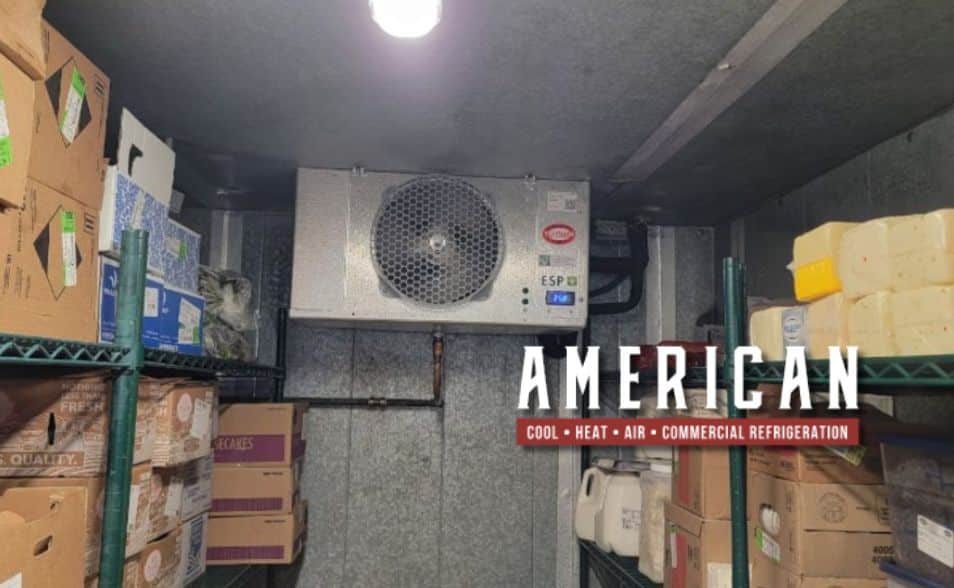
- Walk-in coolers are struggling to hold safe food temperatures
- Energy bills are rising without a corresponding increase in usage
The reverse is also true: a refrigeration system that's leaking, losing efficiency, or running a dirty condenser adds heat to your kitchen environment, forcing your HVAC to compensate. The two systems are in constant conversation with each other — whether you're managing that conversation or not.
Warning Signs Your Kitchen's Cooling Systems Need Service
Most equipment doesn't fail without warning. The challenge is knowing what to look for.
Refrigeration red flags:
- The walk-in cooler temperature is creeping above 38°F despite normal settings
- Ice buildup on evaporator coils or around door seals
- The compressor is making new or louder noises than usual
- Condensation or pooling water around refrigeration units
- Energy bills are rising without a corresponding increase in usage
HVAC red flags:
- The kitchen feels significantly hotter than usual, even with the equipment running normally
- Uneven temperatures across the dining room or kitchen
- Unusual smells or reduced airflow from vents
- HVAC unit cycling on and off more frequently than normal
- System struggling to reach the set temperature during peak heat
If you're seeing multiple signs across both systems simultaneously, that's a strong indicator that the problem is environmental — not just a single unit failure. A technician who understands both sides of the equation can diagnose the root cause instead of chasing symptoms.
A Practical Maintenance Schedule for Desert Restaurant Kitchens
Manufacturers publish general maintenance guidelines, but those are designed for average conditions. In the Coachella Valley, the desert climate demands a more aggressive approach.
Monthly
- Clean condenser coils on all refrigeration units (grease and dust accumulate fast in kitchen environments)
- Check door gaskets and seals on walk-ins and reach-ins for wear or gaps
- Inspect HVAC air filters and replace if heavily loaded
Quarterly
- Professional HVAC inspection — check refrigerant levels, electrical connections, and motor condition
- Refrigeration system check — evaporator coil inspection, thermostat calibration, drain line cleaning
- Verify compressor operation and check for unusual vibration or noise
Before summer (March–April), this is the most important service window of the year for Coachella Valley restaurants. Before temperatures spike, you want a full commercial HVAC tune-up, a walk-in cooler and freezer inspection to confirm they can handle ambient temperatures above 100°F, and any deferred repairs addressed before the system is under peak load.
A refrigeration or HVAC failure in July or August means longer response times, higher emergency service costs, and the real risk of lost food inventory. A spring tune-up is the most cost-effective protection you have.
Why Coachella Valley Restaurants Choose American Cool Heat Air
Most HVAC companies service either commercial HVAC or refrigeration — not both. American Cool Heat Air does both, which means when you call us about your walk-in cooler, we're also looking at the environment it's operating in. That integrated perspective catches problems that can be missed when two different contractors work independently.
We serve restaurant, hospitality, and food service operators across Palm Desert, Rancho Cucamonga, and throughout the Coachella Valley. Our team understands the specific demands of desert climate operation and can build a maintenance plan that fits your service schedule — not just a generic checklist.
If you're not sure whether your current systems are ready for summer, we offer commercial inspections that cover both HVAC and refrigeration in a single visit — the fastest way to know where you stand before peak season puts everything to the test.
Ready to schedule? Call us at 760-750-0808 or book an appointment online.